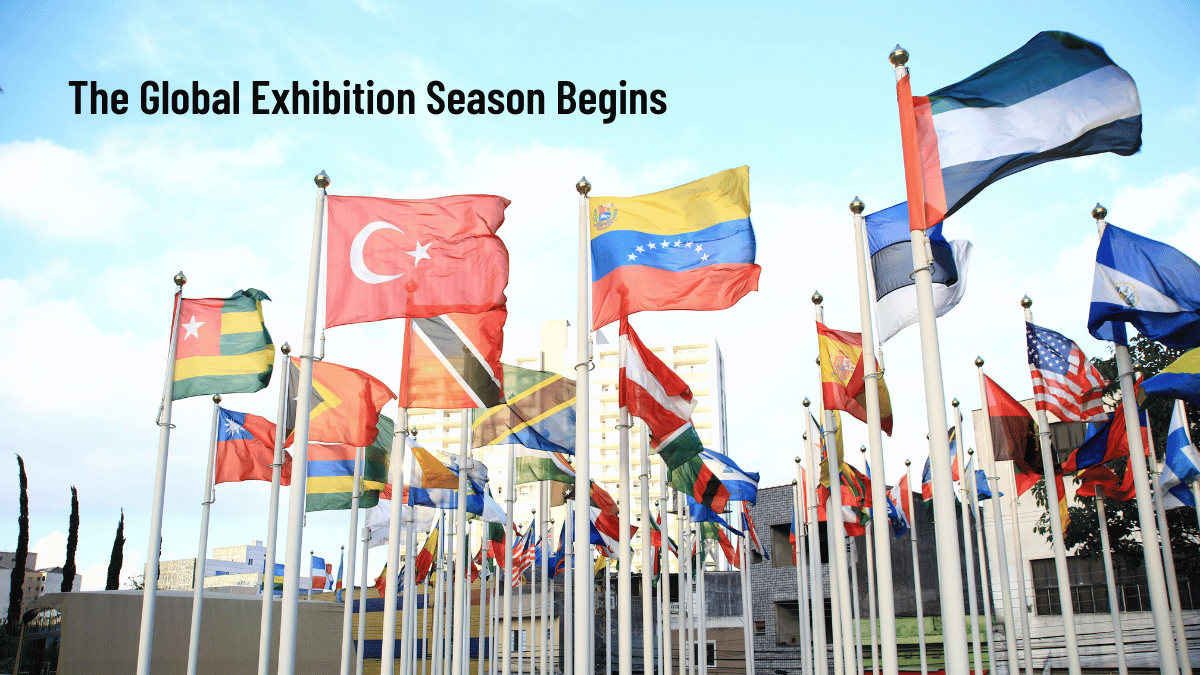
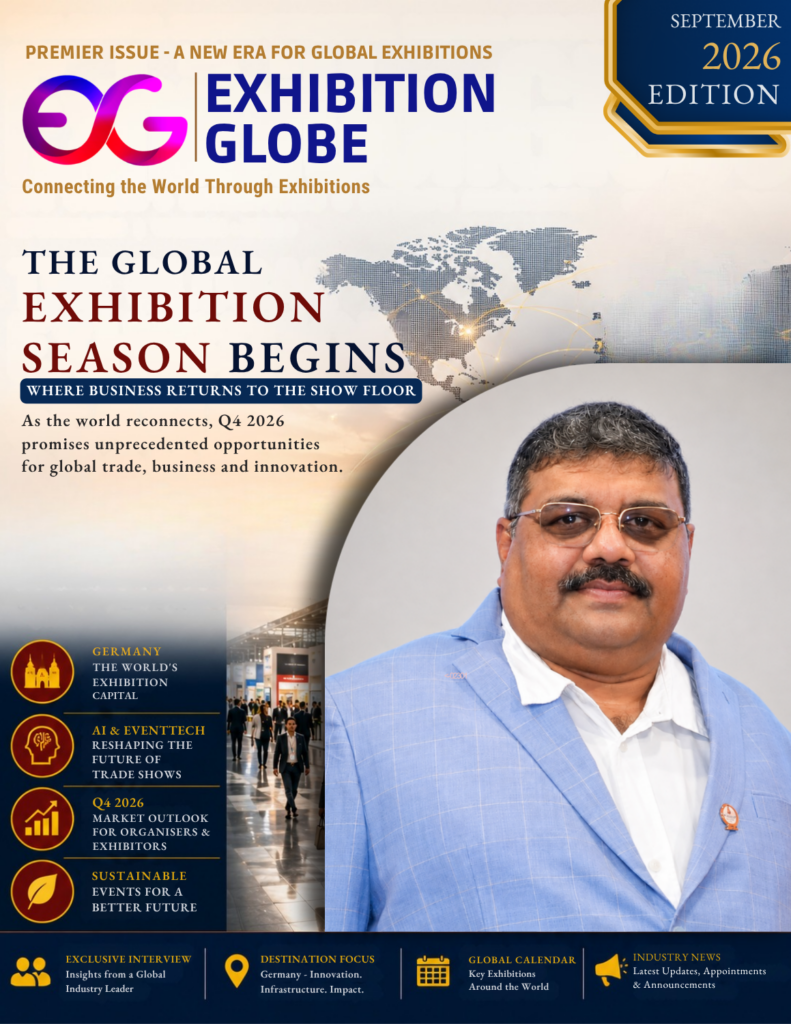
The global exhibition industry is entering one of its most important periods of the year as the Q4 2026 exhibition season gets underway. From September through December, exhibition halls, convention centres and business event destinations across major markets will welcome manufacturers, buyers, investors, technology companies, government representatives and industry professionals.
The final quarter represents more than a busy period on the international exhibition calendar. For businesses, it is a time to introduce products, meet customers, evaluate markets, build partnerships and turn business discussions into commercial opportunities.
Why Q4 2026 Is Important for the Global Exhibition Industry
The fourth quarter brings together a major concentration of international exhibitions covering sectors such as manufacturing, technology, construction, mobility, energy, healthcare, consumer products, logistics and professional services.
The period is particularly important because businesses often use the final months of the year to review performance, explore new opportunities and prepare strategies for the year ahead. Exhibitions provide a physical environment where these objectives can take place at the same time.
For exhibitors, Q4 offers opportunities to demonstrate products directly to relevant audiences. Buyers can meet multiple suppliers and compare technologies within a concentrated timeframe, while exhibition destinations can benefit from business travel, hospitality, transportation and other related economic activity.
The Power of Exhibitions and Their Global Impact
The influence of exhibitions extends well beyond the exhibition floor. A successful trade show can bring together thousands of businesses and professionals while creating opportunities for knowledge exchange, investment and international collaboration.
The global exhibition ecosystem includes more than 1,250 major exhibition venues, along with billions of visitors and significant economic activity generated through business events. These figures demonstrate the scale of an industry that connects organisers, exhibitors, buyers, suppliers, venues, service providers and governments.
The result is a business ecosystem where professional relationships can develop through direct interaction and where conversations started at an exhibition can continue long after the event has ended.
Exhibitions Connect Global Markets
One of the defining characteristics of modern exhibitions is their international reach. A company participating in an exhibition in one country may meet buyers, distributors, investors and business professionals from several regions during a single event.
This makes exhibitions particularly relevant for companies looking to enter new markets. A manufacturer can demonstrate its technology to international distributors, while a startup can meet potential investors and an established company can identify new customers.
Government-backed industry pavilions can also use exhibitions to showcase national manufacturing capabilities, investment opportunities and emerging industries.
The global exhibition season therefore acts as a bridge between markets, industries and business communities.
Understanding the Global Exhibition Value Chain
The exhibition ecosystem can be understood as a connected business value chain. It begins with market demand, where industries identify emerging requirements and commercial opportunities.
This demand encourages product innovation as companies develop new technologies, products and services. The next stage is business interaction, where exhibitors and buyers meet through trade shows, conferences and business events.
These interactions can create commercial opportunities, including partnerships, investments, distribution agreements and long-term business relationships. The wider result is industry development and economic activity.
This value chain demonstrates why exhibitions should not be viewed simply as temporary events. Their influence can continue long after an exhibition closes.
Why the Q4 Season Matters to Exhibition Organisers
For exhibition organisers, the Q4 season represents the culmination of months of planning, sales, marketing, visitor acquisition, exhibitor management and operational preparation.
Organisers must create an environment that delivers value to every stakeholder involved in an event. Exhibitors expect relevant audiences and meaningful business opportunities, while visitors want access to products, suppliers, experts and industry knowledge.
Sponsors and partners also look for visibility and engagement. Delivering these expectations requires coordination across venue operations, logistics, marketing, technology, security and visitor experience.
Successful exhibition management therefore depends on the ability to bring multiple functions together into one coordinated event experience.
Exhibitors Are Moving Towards More Targeted Engagement
The role of the exhibitor is changing as companies increasingly look beyond simply occupying exhibition space. Businesses want measurable engagement, stronger lead generation and meaningful conversations with decision-makers.
Modern exhibition stands increasingly combine product demonstrations, interactive technology, digital presentations and face-to-face consultations. The objective is to transform exhibition visitors into potential customers and business partners.
This approach becomes particularly important in competitive industries where buyers may visit several companies offering similar products or services. Exhibitors therefore need to communicate their value clearly and create experiences that encourage meaningful conversations.
Buyers Are Looking for Solutions, Not Just Products
The expectations of exhibition visitors have also evolved. Business buyers increasingly attend exhibitions with specific challenges and requirements in mind.
They may be searching for manufacturing equipment, technology upgrades, new suppliers, sustainable solutions, logistics services or opportunities to enter new geographical markets.
As a result, exhibitions are becoming increasingly solution-oriented. Instead of simply displaying product catalogues, exhibitors are demonstrating how their products and services can address real business challenges.
This creates value for both sides of the marketplace. Buyers can compare solutions in person, while exhibitors can gain direct insight into customer requirements.
September Marks the Shift From Planning to Action
Every successful exhibition begins long before its opening day. September is particularly significant for the global exhibition industry because the market moves from planning into execution.
Exhibitors begin finalising their stands, marketing campaigns intensify, buyers schedule meetings and organisers focus on delivering the visitor experience.
For businesses participating in major Q4 exhibitions, preparation can have an important role in how effectively they use the event. Pre-event communication, appointment scheduling, product announcements, media outreach and digital promotion can help companies arrive with clearly defined objectives.
The Role of Organisers in Creating Business Opportunities
Organisers sit at the centre of the exhibition ecosystem. Their responsibilities extend from selecting venues and developing event concepts to attracting exhibitors and visitors.
They also manage floor plans, conference programmes, sponsorship opportunities, networking activities and operational requirements. Digital tools are increasingly being incorporated into visitor registration, communication and data management.
As a result, the modern exhibition is becoming a combination of physical and digital experiences. The physical event creates opportunities for face-to-face interaction, while digital platforms support discovery, registration, communication and post-event engagement.
Government Support Strengthens Exhibition Ecosystems
Government participation is another important component of major international exhibitions. Government agencies and industry bodies frequently support exhibitions because these platforms can showcase national capabilities, promote investment and facilitate international trade.
Country and regional pavilions allow businesses to present themselves collectively and create stronger international visibility.
For emerging markets, exhibitions can be particularly useful for demonstrating manufacturing capabilities, attracting foreign investment and connecting local companies with international buyers.
Technology Is Changing the Exhibition Experience
Technology continues to influence almost every part of the exhibition industry. Digital registration systems, event applications, matchmaking platforms, data analytics, interactive displays and artificial intelligence are increasingly becoming part of business events.
Technology can help organisers understand visitor behaviour and improve operational efficiency. Exhibitors can also use digital tools to capture leads and maintain communication with potential customers after the event.
However, technology does not replace the fundamental purpose of exhibitions: bringing people together. The strongest exhibition experiences combine digital convenience with personal interaction.
Sustainability Is Becoming Part of Exhibition Planning
Sustainability is increasingly becoming part of exhibition planning. Large-scale events require significant resources, including energy, construction materials, transportation and printed materials.
Organisers and venues are therefore exploring approaches that can reduce environmental impact. Reusable stand structures, digital communication, efficient lighting, responsible waste management and sustainable venue practices are becoming increasingly relevant to event planning.
Sustainability can also influence the products and technologies presented at exhibitions, particularly across industries such as energy, manufacturing, mobility and construction.
What the Global Exhibition Season Means for Business
For businesses, the Q4 exhibition season provides an opportunity to turn market conversations into action. An exhibition can help companies identify new customers, evaluate competitors, discover technologies, meet suppliers and establish international relationships.
However, participation is most effective when companies enter an event with clearly defined objectives. These may include generating qualified leads, entering a new geographical market, launching a product, meeting distributors, strengthening brand visibility or researching competitors.
The exhibition provides the platform, while the company’s business strategy determines how that platform is used.
The Importance of Networking at Global Exhibitions
Networking remains one of the most important advantages of exhibitions. Although digital communication allows companies to communicate across borders, face-to-face meetings can create a different level of engagement.
A conversation at an exhibition can lead to a follow-up meeting, product demonstration, quotation, partnership or long-term commercial relationship.
Networking also happens beyond formal business meetings. Conversations between exhibitors, visitors, organisers, speakers and industry experts can create unexpected opportunities and introduce companies to new business networks.
Conferences Add Knowledge to the Exhibition Floor
Modern exhibitions increasingly combine product showcases with conferences, seminars, panel discussions and technical sessions.
This creates a broader experience for visitors. The exhibition floor provides access to products, technologies and companies, while conferences offer market intelligence, expert perspectives and industry discussions.
The combination allows professionals to pursue both commercial opportunities and knowledge during the same business event.
Looking Beyond the Exhibition Hall
The influence of the global exhibition season extends into the cities and destinations that host major events.
Large exhibitions generate demand for hotels, restaurants, transportation, local services and professional event suppliers. They can also strengthen the international profile of exhibition destinations.
This is one reason cities around the world continue to invest in modern convention centres, exhibition venues and business-event infrastructure.
A successful exhibition destination requires more than an exhibition hall. Connectivity, accommodation, transportation, hospitality, technology infrastructure and supporting services all contribute to the wider business-event ecosystem.
Preparing for the Next Generation of Exhibitions
The global exhibition industry is moving towards events that are more connected, data-driven, sustainable and experience-focused.
Exhibitors are increasingly looking for measurable business results. Visitors want relevant content and efficient networking, while organisers need to deliver better experiences while managing growing operational complexity.
These expectations are likely to influence the exhibition calendar beyond 2026.
The future exhibition will not simply be a place where companies display products. It will increasingly function as a marketplace, knowledge platform, networking environment and launchpad for new business relationships.